By Ruqaya Ahmed, Grade 12, Islamic Foundation of Toronto High School
When I was a little girl, someone once told me that, “You can’t write straight lines on blank paper.” I never really thought about what it meant until one day, when deciding that I was up for a challenge, I took a blank piece of paper and wrote in a perfectly straight line. “That’s how it’s done,” I said to myself. “That’s a straight line.”
Or so I thought until I took a closer look and realized that it wasn’t a straight line at all. If I turned the paper on an angle, I could easily see that it was crooked.
Not being one to acquiescence to anything quickly, I resolved to try again. And again. Each time, the line was a millimetre, a centimetre, or a degree point off. It veered a little too much to the bottom or fluctuated slightly upward. And because the line I drew on that blank piece of paper never lay symmetrically or evenly with the points on itself, it was never perfectly straight.
This got me thinking: It got me thinking about the stories of our lives and how the people we meet are the ones who fill in the pages. It got me thinking about all the people we happen across on our way to school, work or home as we desperately rush to try and stay ahead in this daily rat race of life. These perfect strangers we encounter are the ones we judge the hardest and most often. We give them names and labels and stories. And because we pass judgement on the first glance, we are almost always incorrect.
In this way, we all draw lines on blank paper. And like all lines drawn on blank paper, these preconceived notions rarely correspond to the truth. Because we are so quick draw lines of judgement on people, we keep them restricted in a small space. We don’t allow them to grow.
Think about it.
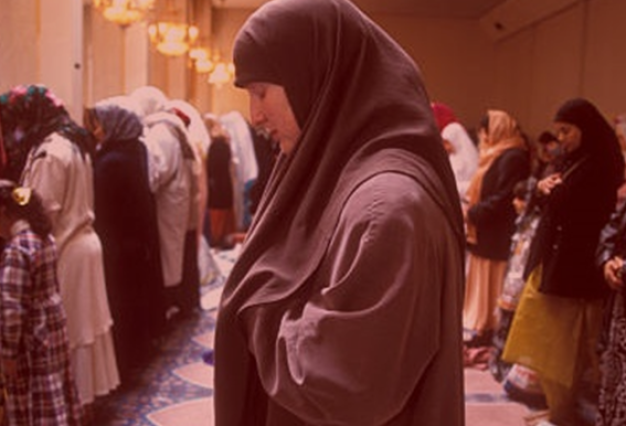
Can you count how many times you’ve seen a young man dressed in baggy pants standing at a street corner and clutched onto your purse a little more tightly? How many times have you seen a homeless man lying on the freezing cold pavement and dismissed him as a drug addict who deserves to live- and die-on the streets? How many times have you seen a woman wearing the niqab at the shopping mall and thought to yourself, “Poor thing. She must be oppressed. But doesn’t she realize she’s in Canada now? She doesn’t have to wear that here.”
Would you be surprised if I told you that that young man is on his way to a college class, not out to partake in an act of gang violence? Would you be astonished to know that the homeless man has seen too many harsh times, too many debts and not enough kindness? Would you be taken aback if that same covered woman approached you and let you know, in no uncertain terms, that it was her choice to wear the veil?
Would you continue to draw the same lines in your mind- those harsh, strict, straight parallels that delineate tolerable from unacceptable, good from evil, and choice from force? Or would you try and erase those lines and look at the world through not only your own perspectives and acuities but also through those of others?
Because the lines are created solely from your own biases and adulterated opinions, and they’ve left you blinded and deaf. Because when you decide to let go of misguided notions and surface facts, there is truth and wisdom to be found in places you never cared to notice before.
Assalamulaikum, respected brothers and sisters. My name is Ruqaya Ahmed, and during the course of my entire life- seventeen years and counting- I’ve been judged. Because I am a visible minority and because I wear the niqab, I have always been on the receiving end of other people’s opinions, judgements, and hateful comments. I know what it feels like to constantly be standing on the other side of the line. Where people, across the safe distance of demarcation, look at you and automatically, words like “fundamentalism,” and “oppression,” and “extremism” spring to thought and tongue.
When faced with these kinds of situations-by which I mean, every single day of my life- I often wonder: who gave these people the right to draw the lines that separate what they believe is fundamentalism from my freedom of choice?
When God created Stephen Harper, Nicolas Sarkozy, Jean Charest, or any other jingoistic, power-hungry and deluded politician in power today, did He hand them His pen and say, “I now give you the right to draw the lines, to decree what is lawful and unlawful and judge by your own opinions?”
Because if he did, I rest my case.
But I have faith that He did not. Because He said in the Holy Quran, “And when you ask them (the Prophet's wives) for anything you want, ask them from behind a screen, that is purer for your hearts and their hearts.” [33:53]. And “...say to the believing women that they should lower their gaze and guard their modesty; that they should not display their beauty and
ornaments except what (must ordinarily) appear thereof; that they should
draw their veils over their bosoms and not display their beauty.” [24: 31]
And if I, or any other Muslim woman, interpret this as an injunction to wear the veil, what gives any politician the right to derogate my religious freedom?
What gives the Canadian government the right to pass Quebec’s Bill 94, basically telling you and I that if we want to become public employees or seek public services, we must remove our face covers? Because as far as I know, this is an unjustifiable violation of the Canadian Charter, a framework of the rights and freedoms that have been guaranteed to me, along with every other Canadian citizen.
But I don’t need a piece of paper to tell me what my rights are, and that they are being violated.
And there isn’t enough outrage.
The Quebec government, by passing Bill 94, has completely debased my civil liberties as a Canadian under section 2 (a-b) of the Charter, which guarantees freedom of conscience, religion, thought, belief, opinion and expression.
I realize that many Muslims believe that the niqab is not an absolute and indubitable religious obligation. I even understand their point of view. But to tout this syllogism to call for the banning of the niqab, as the MCC has done, is inexcusable. It is injustice in its truest form. Because if I, as an individual, believe that the niqab is a religious requirement, then my right to freedom of religion has been grossly negated. The Toronto Star columnist Haroon Siddiqui writes, “That a majority of Jews do not wear the kippa, or that many Sikhs do not wear a turban, does not negate the right of those who do.” He directly applies this to the veil as well.
In any matter, if you choose not to regard the niqab ban as a violation of the freedom of religion, then it all comes down to a freedom of choice. In Canada, under prerogative of the topfree equality law, women lobbied successfully to go shirtless in public. Same-sex couples can now marry. Abortion has been legalized. So, for a society that has relied on the fundamental freedom of choice to legalize these actions- once considered immoral and punishable by law- I find it highly ironic that the government chooses to draw the line at the niqab.
Think about it. By law, a woman can choose to kill her unborn child. But she cannot choose to cover her face. There no laws governing how much of her body a woman can reveal, but there is a law restricting how much of her body a woman can cover. Ironic. I would even say absurd.
Do people not realize that if my right to freedom of belief and choice, as a niqabi, are taken away- so are all of society’s rights equally eroded along with it? Who’s to say that a defilement of the fundamental freedom of choice by the government will stop at the niqab? Unbeknownst to society, because we’ve accepted the niqab ban so placidly, we’ve also given our condonations for any future human rights violations committed at the hands of our leaders.
There isn’t enough outrage.
CBC News’ special columnist Heather Mallick writes, “In Canada your face is your fortune. It is a way of quickly assessing another human being and figuring out a means of being social… If Muslim women do not adapt to this, they will never fit in Canadian society.” French Prime Minister Nicholas Sarkozy tells the New York Times that, “burqa hurts the dignity of women and is unacceptable in French society.”
Would you say that the Canadian or French society is in a great shape, socially, because people choose to not cover their faces? If so, consider the fact that in a UN worldwide census of countries with the highest rape rates, Canada ranks highly, with about 0.733 rapes per 1 000 people. In France, 0.13 people per a thousand are raped. Meanwhile, in Saudi Arabia, a nation that requires by law for its citizens to dress modestly, the average rape rate stands at 0.0032 per 1 000 people. Canada ranks fifth on the list. France ranks fifteenth. Saudi Arabia ranks sixty-fifth and rests at the bottom of the list.
Now, I will not be as obtuse as to claim that veiling and rape rates are directly correlated, but if politicians are trying to say that modesty equals subjugation, I suggest they approach is from a different angle. Because facts are facts.
Moreover, the niqab does not relegate women as second-class citizens. In fact, according to recent studies, Muslim women-including the several who choose to wear the veil-are actually among the most highly educated female religious groups, second only to Jewish American women. The survey, taken in 2009 by the Gallup Center for Muslim Studies notes, “As a group, Muslim Americans have the highest degree of economic gender parity at the high and low ends of the spectrum."
So I challenge the Canadian government, along with my fellow citizens to give sufficient reasoning on why they’ve marked a line separating me from the rest of society. If you truly believe that by wearing a niqab, I am oppressed and alienated from the mainstream, isn’t a ban only a further act of marginalization? If you truly believe that Muslim women are wearing the niqab because of the edicts of their families and menfolk, by banning the niqab, are you not subjecting us to the edicts of the rest of society? How is this, in any shape or form, “progress?”
Ask yourselves: how logical is it to allow an RCMP officer wear a turban, or for a student to carry a kirpan to class, but to draw the line at the niqab? Ask yourselves: Is it possible to physically threaten the safety of another human being with a kirpaan? Yes, as established by reports of recent fight in a Brampton gurdwara. Is it possible to threaten the physical safety of another human being with a niqab? No.
In the early nineties, Canada was steadfast in redesigning the uniform of the national police to accommodate an immigrant’s religion. But why stop now? Why draw the line at the niqab?
Simply put, there isn’t enough outrage.
I find it at once interesting and disheartening to see how the lines we’ve so self-righteously drawn separating what we believe is right and wrong, have only imprisoned us. We’ve become slaves of our own misguided perceptions.
I was at a local café recently, when an elderly woman approached me, and kindly informed me that I was in Canada now, not Saudi Arabia or Iran. She told me I was now in a free country, “free to take it off.”
As if Saudi Arabia or Iran are the only countries where women are told what they should or should not wear. As if Canada isn’t doing the same thing. And truth be told, if liberation in today’s society means that women’s bodies are used in advertisements to sell commercial products, excuse me for not wanting to be “liberated.”
I truly believe that Canada is a great country, a beautiful mosaic of different cultures, religions, and nationalities. A country where people from different walks of life have an equal access to healthcare, education and career opportunities. But society took a backward step when Bill 94 was passed. And every paltry excuse politicians and supporters of the niqab ban have presented on this issue has been struck down time and time again.
The Supreme Court of Canada once stated:
“A truly free society is one which can accommodate a wide variety of beliefs, diversity of tastes and pursuits, customs and codes of conduct… What may appear good and true to a majoritarian religious group should not be imposed upon citizens who take a contrary view. The Charter safeguards religious minorities from the threat of “the tyranny of the majority.”
If the majority of people do not choose to cover their faces, is that sufficient means for the government to invalidate my personal religious choice? I say no. And, I ask on behalf of every Canadian Muslim woman, why Canada refuses to accommodate our beliefs and choices.
But I am only one person, with one voice that is drowned out by a million because there isn’t enough outrage.
And why isn’t there enough outrage?
It’s because we’ve all become much too comfortable with the lines we’ve drawn around ourselves. We spend our whole lives living behind these lines- until they become all we know.
These same lines that we think protect us from opposing countenances and ideologies, are only boxing us in.
Look around. You are standing in your own, personal self-made jail cell. And it’s left you blinded and ignorant of the truth. Life, as liven through the same lines you’ve created, over and over again is a dead place that just breathes.
As a society, we are stuck in a moral limbo. The face of tomorrow’s future is a generation that today, is being raised by pop culture, reality television and a sensationalist media. We’ve forgotten how to challenge. Indifference has become our only mechanism of action. And indifference is inaction.
So it’s time for us to erase the lines you’ve created in your minds. It’s time to step outside your boxes. There’s a whole world out there beyond the lines of your mind.
Refuse to remain within the lines someone else has created to constrain you. Realize that you only have a short lease on life, so think twice before you sign on any dotted line. Read the fine print. Realize that it is a God-given right to have a mind of your own. To be something, to practise something, to wear something, to say something because you believe that it’s right.
Realize that, today only my rights have been violated, but tomorrow it could be yours.
Realize that if you wish to protect your rights which are in equal danger of infringement, the time to act is now. So help me protect my rights.
Because if you peel away all the layers, I am just like you. And I live just like you. I wait in lines, just like you. Sometimes I cut in line. In this universal stage that is called life, sometimes I forget my lines, and say or do the wrong thing, because I am human, after all. I walk the line when I am told not to. I erase the lines if I find them too constraining. But when I am told to take off a piece of clothing that has unequivocally become a part of my identity- that is where I draw the line.
Why aren’t you outraged?